



In this guide, we explore the roots of taste — the varieties that define specialty coffee and the story of each bean roasted by Bogdan Georgescu at MABÓ.
Let's see what the types of coffee, aka Coffee Varieties, are.
Every coffee begins with a bean — but not all beans are created equal.
Just like grapes in wine, variety influences the final taste, aroma, and personality of the coffee.
Some varieties are decades old, cultivated on the same farms and passed down from generation to generation; others are new, resulting from research and farmers' passion for innovation.
From Typica and Bourbon, considered the roots of modern coffee, to rare varieties like Gesha or SL28, each tells a story of place, adaptation, and character.
Discovering varieties is a journey through taste and history — an invitation to understand more deeply what makes each MABÓ coffee unique.
Arabica vs. Robusta – two worlds, two destinies
There are two main species of coffee cultivated for consumption worldwide: Arabica (Coffea Arabica) and Robusta (Coffea Canephora). At MABÓ, the choice is clear: 100% Arabica, selected from transparent origins and farms that view coffee as a culture of quality.

Arabica
Arabica is a more delicate and demanding species, cultivated at high altitudes, where temperatures are lower and the soil is richer. In these conditions, the cherries ripen more slowly, and the beans develop complex aromas and natural balance. It has a lower caffeine content but an impressive aromatic diversity — from flowers and fruits to fine chocolate, caramel, or citrus. The beans are more elongated, and the taste is cleaner, refined, and elegant.

Robusta
Robusta, on the other hand, is a more resilient species, grown at low altitudes, in areas with a warm and humid climate. The plant develops almost double the caffeine — a natural defense mechanism against pests and diseases, more common at low altitudes. This extra caffeine makes it more…robust, hence its name, but also gives it a more bitter, intense taste, with earthy notes of roasted cereals and raw cocoa.
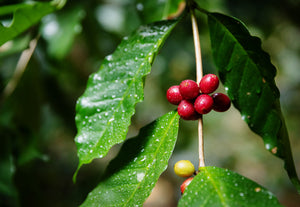
Typica
Typica is one of the oldest and most important Arabica coffee varieties — the origin from which many modern cultivars have derived. It was discovered in Ethiopia, traveled through Yemen, and then arrived in Asia and Latin America, where it became a benchmark for quality and balance.
It is a low-yielding plant, but with remarkable aromatic potential. Typica coffees are recognized for their clarity of taste, fine acidity, and balanced sweetness, often complemented by floral notes, delicate fruits, and a long, silky aftertaste. Typica is a coffee that does not seek to impress with intensity, but with finesse and transparency — it expresses its origin with rare purity.
In the cup, it is the perfect balance between elegance and simplicity, between tradition and refinement. For MABÓ, Typica is a symbol of the essence of specialty coffee — clear, clean, and profoundly human.
Yellow Bourbon offers moderate yields and is more sensitive to environmental conditions, but it rewards the grower's efforts with aromatic complexity and exceptional balance. Bourbon coffees typically have a velvety body, natural sweetness, and notes of chocolate, caramel, red fruits, and white flowers. It is a variety that adds depth and roundness to the taste, while maintaining classic elegance—a balance between power and finesse. For MABÓ, Yellow Bourbon represents the perfection of natural balance: a coffee that speaks softly but lingers long in memory.
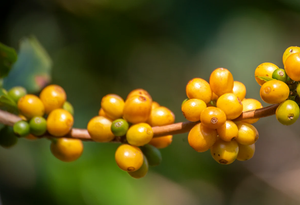
Yellow Bourbon
Bourbon is one of the most beloved and respected varieties of Arabica, directly descended from Typica. It originated on Réunion Island (formerly called Île Bourbon), in the Indian Ocean, from which it took its name, before being taken to Africa and Latin America.
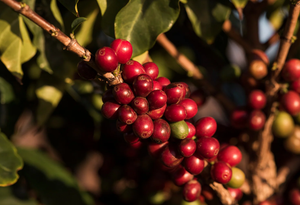
Caturra
Caturra is a natural mutation of the Bourbon variety, first discovered in Brazil in the 1930s. It is a shorter plant with dense branches and broad leaves, easy to harvest and adaptable to various altitudes — a characteristic that has made it popular throughout Latin America.
Beyond its agronomic aspects, Caturra impresses with its balanced flavor profile: a combination of the velvety sweetness of Bourbon and a clear, fruity acidity, typical of high-altitude coffees. In the cup, it often offers notes of citrus, caramel, green apple, and milk chocolate, with a fine texture and a clean finish. For MABÓ, Caturra is the variety that manages to combine tradition and efficiency without sacrificing emotion. A sincere, harmonious, and lively coffee — the perfect balance between precision and simplicity.
Catuai coffees offer a pronounced sweetness, a pleasant acidity, and a round body, often characterized by notes of nuts, honey, yellow fruits, and chocolate.
Its profile is balanced and approachable, yet with a subtle depth that reveals itself as it cools.
For MABÓ, Catuai represents the modern expression of balance — a clean, versatile, and friendly coffee that combines agronomic consistency with the joy of pure taste.
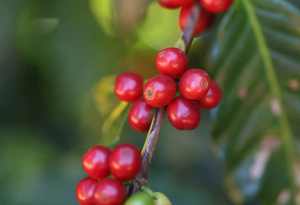
Catuai
Catuai is the result of a successful cross between Mundo Novo and Caturra, carried out in Brazil in the 1940s with the aim of combining productivity with quality. The plant is small in stature and resistant to wind and rain, which makes it ideal for cultivation at varied altitudes and in diverse conditions.
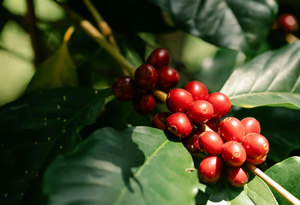
SL28
SL28 is one of Kenya's most iconic Arabica varieties—a coffee that has become synonymous with the clarity and elegance of African taste. It was developed in the 1930s by Scott Laboratories (hence the name "SL") as part of a research program aimed at identifying resilient varieties with exceptional quality potential.
SL28 is appreciated for its ability to preserve natural sweetness and for its brilliant acidity, similar to fine wines.
In the cup, it offers a distinct profile, with notes of berries, blackcurrant, citrus, and brown sugar, complemented by a velvety texture and remarkable clarity. Although it is not an easy plant to cultivate—being susceptible to pests and drought—farmers continue to grow it for what it uniquely brings to the world: complexity, depth, and an unmistakable flavor identity. For MABÓ, SL28 is a variety that speaks of art and patience, a coffee that transforms precision into emotion and the African terroir into a story of pure elegance.
Gesha is a difficult and demanding variety, but when conditions are perfect, it offers one of the most expressive tasting experiences possible. In the cup, it stands out with intense floral aromas—jasmine, rose, white flowers— along with notes of honey, tropical fruits, and sweet citrus. It has a delicate, almost ethereal texture, and an aromatic clarity that makes it unmistakable. Each Gesha harvest is an exercise in patience and mastery, a collaboration between nature, farmer, and roaster. For MABÓ, Gesha is the ultimate expression of the balance between art and science, a coffee not to be drunk hastily, but to be savored.
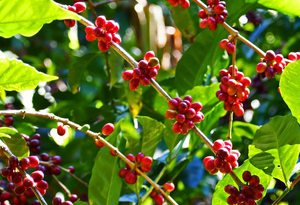
Gesha (Geisha)
Gesha – or Geisha, as it is also known – is one of the most refined and admired Arabica varieties. Originating from the Gesha region in southwest Ethiopia, it was rediscovered and brought to Panama in the 1960s, where it quickly became a symbol of excellence in specialty coffee.
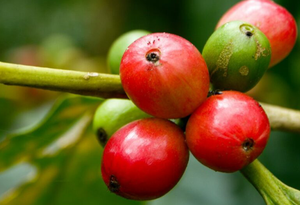
Pacamara
Pacamara is the result of a cross between the Pacas and Maragogipe varieties, developed in El Salvador in the 1950s. It is a variety that impresses from the first moment — the beans are unusually large, and the taste is as generous as its form.
Pacamara combines the dense structure and clear acidity of Pacas with the aromatic complexity and subtle sweetness of Maragogipe. In the cup, the result is often spectacular: full body, creamy texture, and notes of tropical fruits, caramel, fine spices, and dark chocolate. It is an intense yet elegant coffee, where each sip seems carefully composed. For farmers and roasters, Pacamara is a challenging variety, sensitive to climate and processing conditions, but capable of offering some of the most complex coffees in the world. For MABÓ, Pacamara represents the courage to experiment without compromise — a coffee with personality, depth, and a memorable presence.
The term Ethiopian Landraces describes this natural diversity, cultivated and passed down by local communities for hundreds of years. Depending on the region—Yirgacheffe, Sidamo, Guji, Jimma, or Limu—the flavors can vary from floral and citrus to honey, peach, black tea, or tropical fruits. In the cup, these coffees are a revelation: delicate, complex, vibrant, and spontaneous, a reminder of coffee's origin and natural freedom. For MABÓ, Heirloom signifies the beginning of all stories—the pure essence of Arabica coffee, the place where it all began and to which we always return for inspiration.
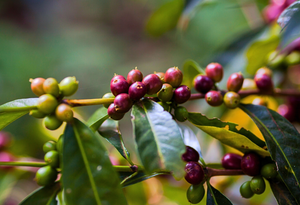
Heirloom / Ethiopian Landraces
Heirloom does not refer to a single variety, but to an entire family of native varieties from Ethiopia—the birthplace of Arabica coffee. In this country, thousands of varieties grow spontaneously in forests or on isolated slopes, each with unique genetics and a distinct aromatic profile. These are coffees that have not been modified or standardized, preserving nature's pure character.
Varieties – the language of diversity in coffee
Each variety of Arabica coffee carries a story: about the place where it grew, the people who cared for it, and how it was processed.
From the classic elegance of Typica and the balance of Bourbon, to the aromatic exuberance of Gesha or the depth of Pacamara, each variety expresses a different way of understanding taste.
For MABÓ, these varieties are not just botanical names, but languages through which coffee speaks about diversity, nature, and emotion.
We carefully select them, roast them with intention, and offer them to you in your cup — so that you can feel the difference between a simple taste and a truly vibrant experience.
In the end, each variety tells the same story, told in dozens of different dialects: about curiosity, culture, and the joy of experiencing coffee with meaning.

